Third Iron’s Problematic Publishers brings an entirely new layer of scholarly integrity awareness to your LibKey services! This product highlights publishers engaging in different concerning practices that have been identified by Third Iron's own unique review process.
Problematic Publishers consists of two related features: Problematic Journal and Problematic Domain. These are driven by the same data and set of publisher concerns but highlight the connection in unique ways.
TABLE OF CONTENTS
- Problematic Journal Feature
- Problematic Domain Feature
- Potential Concerns
- Appeal Process
- Frequently Asked Questions
Problematic Journal Feature
The Problematic Journal feature indicates that the user is looking at an article in a journal associated with a publisher with whom we have identified one or more concerns. This signposting will appear throughout LibKey at the point of discovery.
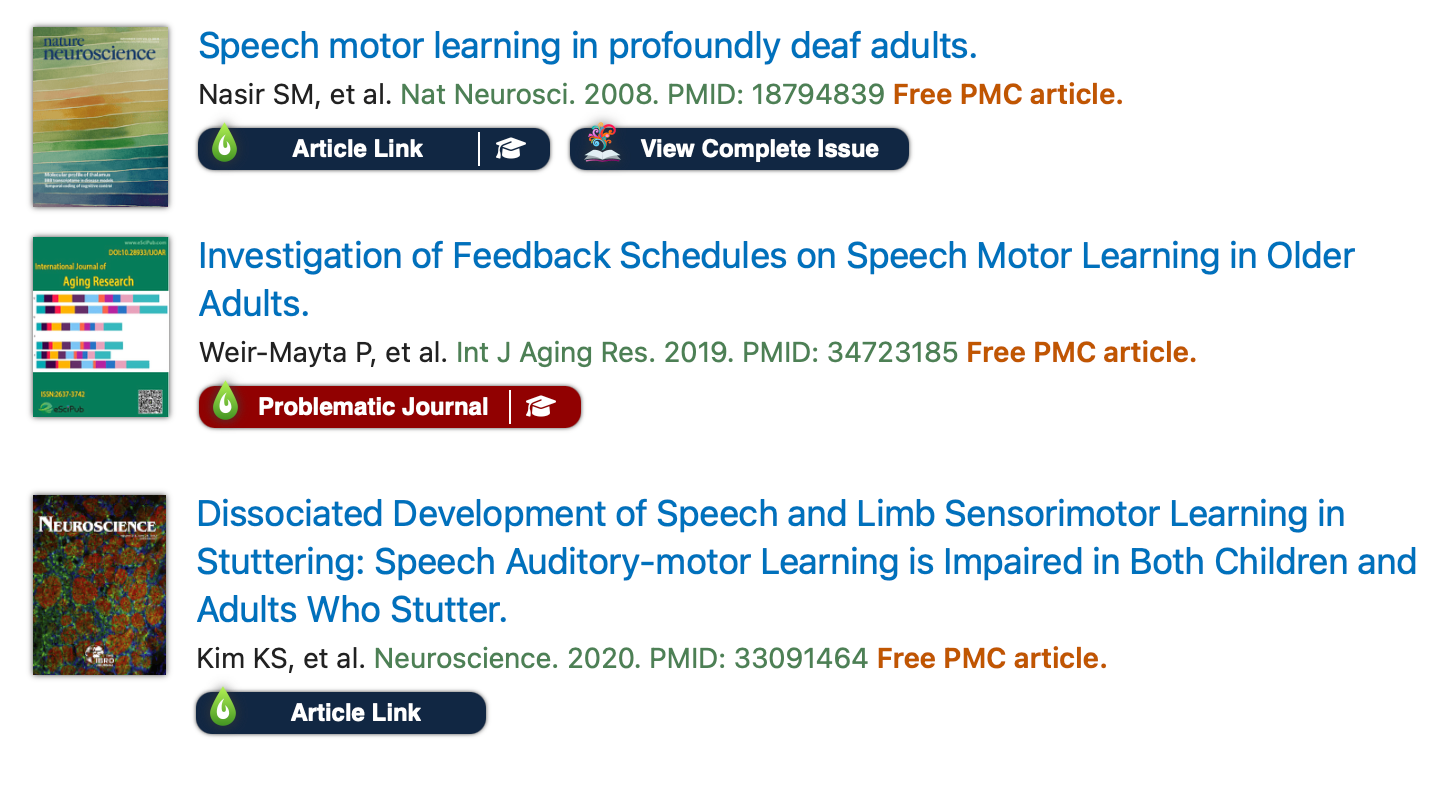
This will appear in LibKey Nomad while searching inside of a database such as PubMed:
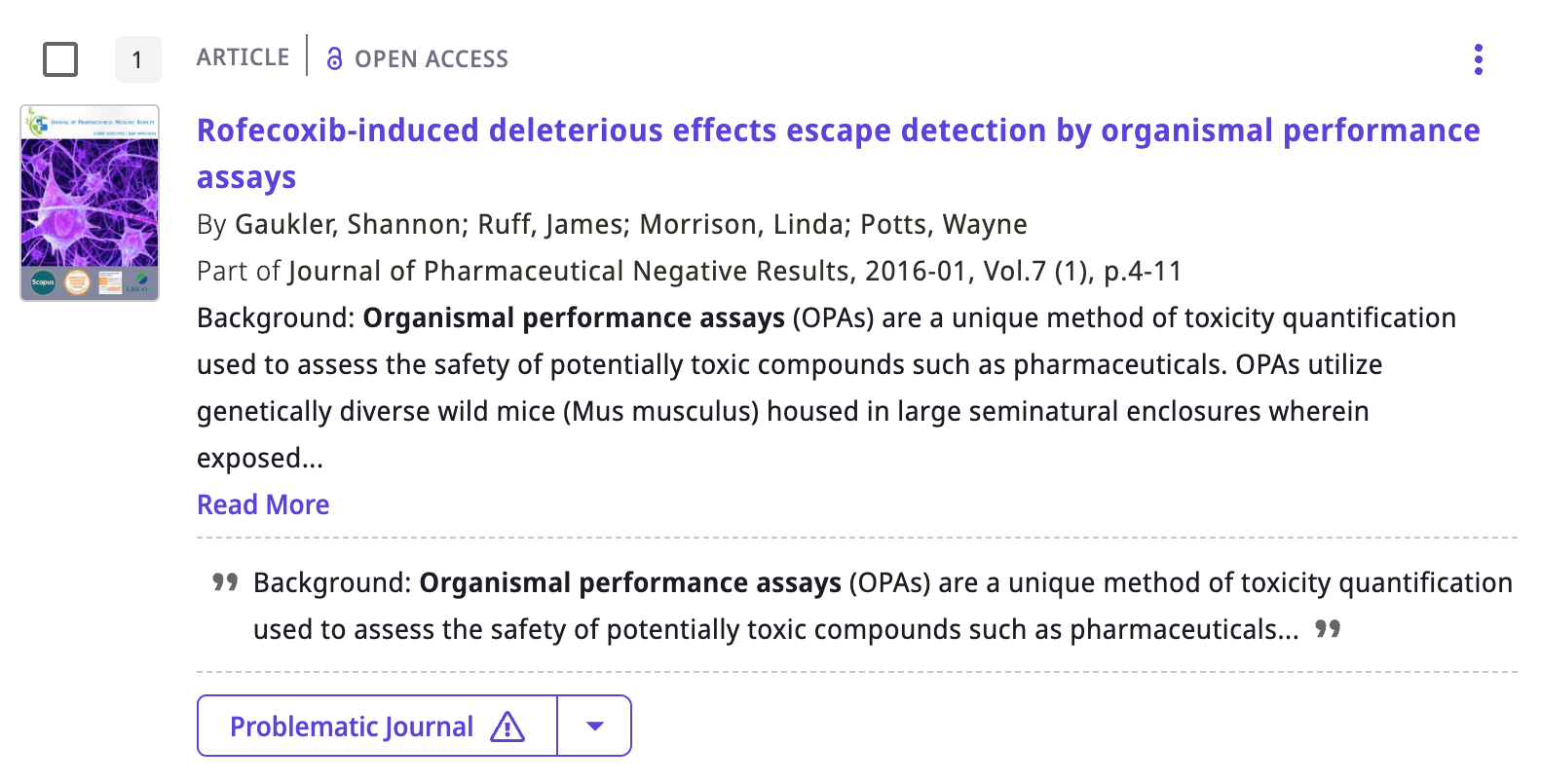
It will appear in article results in discovery systems with LibKey integrated:
Or users may see it shown in our LibKey Format Chooser after following a link from a connected platform or service:
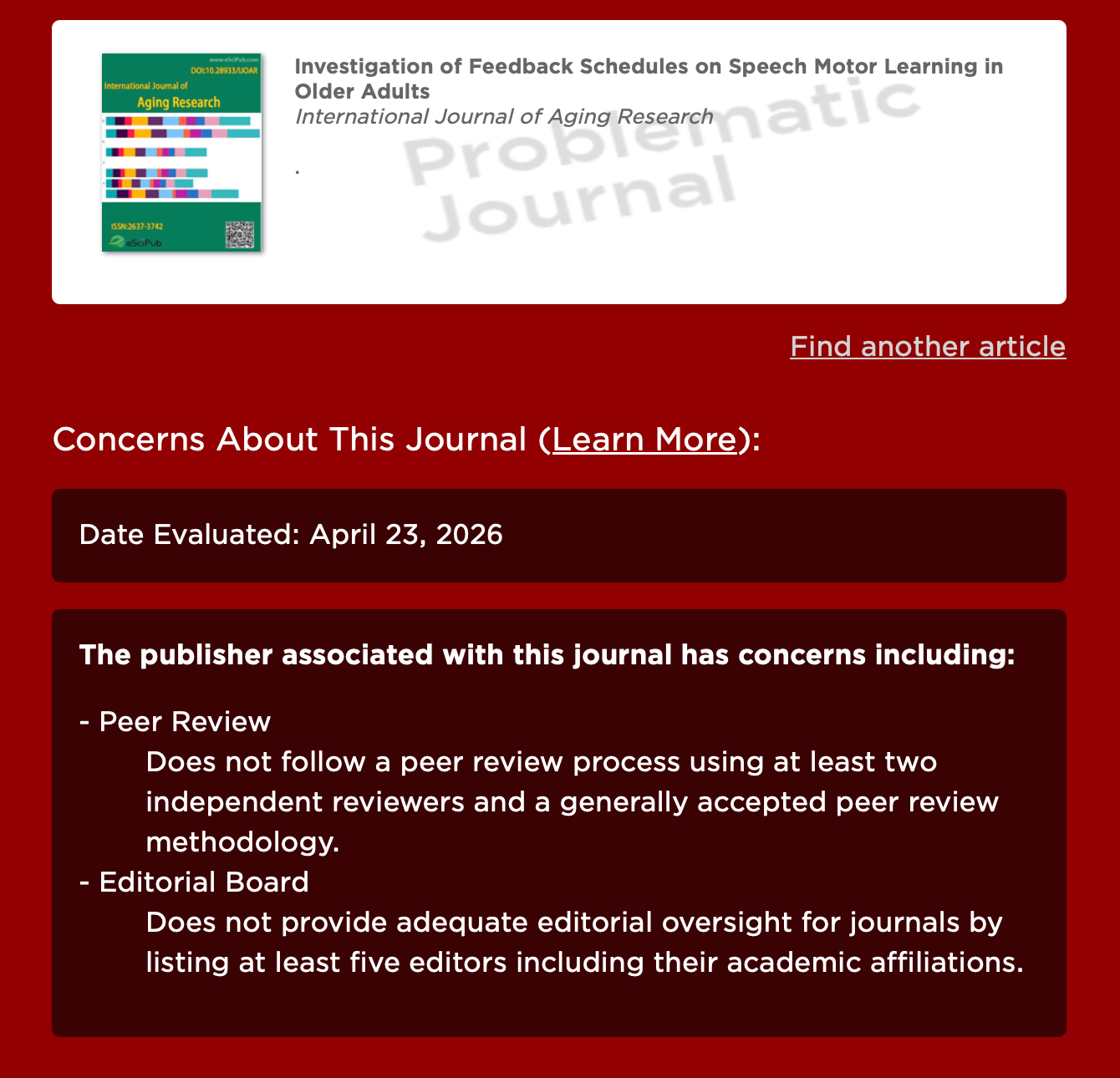
All of these "Problematic Journal" links across LibKey point back to the Format Chooser screen shown above. From there users can see more information about the concerns for the publisher associated with this journal. Links to full text are still offered if the user would like to continue or make their own determination on the article but this vital context from Problematic Publishers is brought to their attention.
Problematic Domain Feature
The Problematic Domain feature is unique to LibKey Nomad! This feature detects when a user with LibKey Nomad installed visits a URL associated with a publisher with whom we have identified concerns.
Perhaps you've received a solicitation to submit to a journal or are exploring journals to publish in. If you visit a URL associated with one of our Problematic Publishers, LibKey Nomad will alert you with "Problematic Domain" signposting:
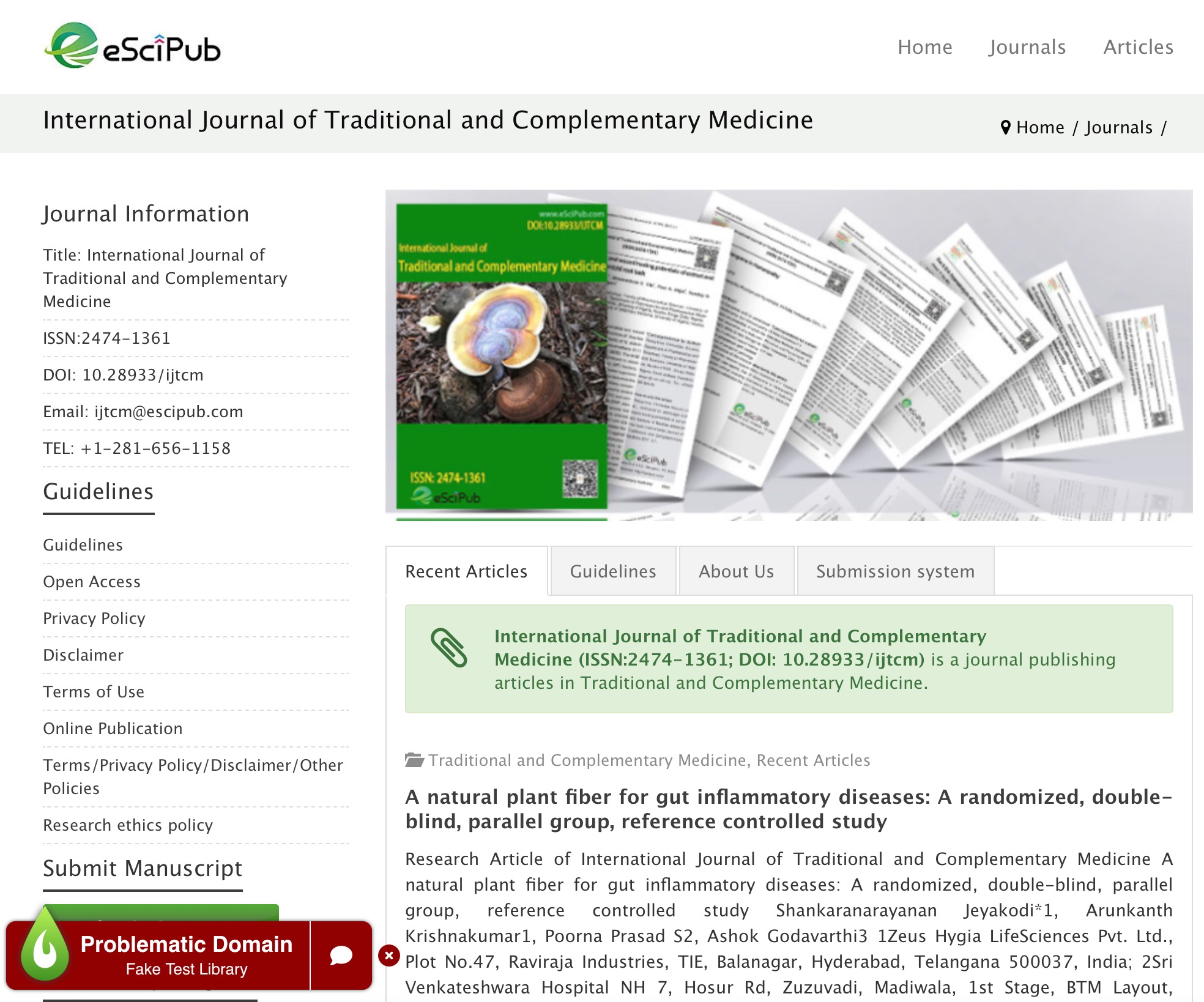
As with the Problematic Journal button, clicking this Problematic Domain button takes you to our LibKey Format Chooser where we display added information. For this feature we display some added information detailing the publisher associated with this domain, the journals they publish and the concerns we have identified for them:
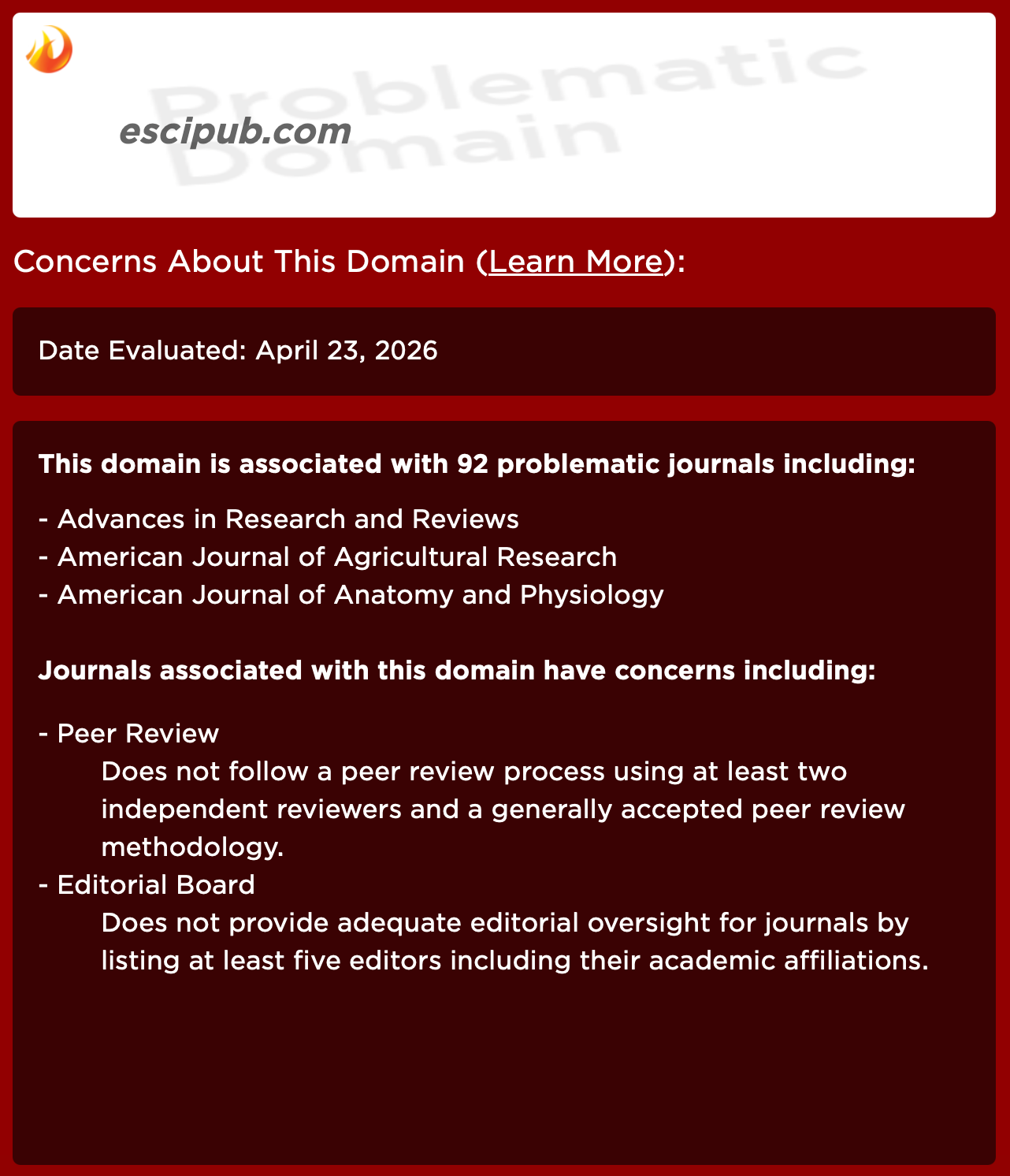
This ensures that our Problematic Publishers product is not only watching out for users in their search and discovery systems but is also watching out for them on the open web!
Potential Concerns
Both Problematic Journal and Problematic Domain are driven by Third Iron's own unique Problematic Publisher data. Our assessment of publishers revolves around a set of nine criteria. These were developed based largely on the guidelines used by the Directory of Open Access Journals (DOAJ) and are focused on ensuring the publisher provides sound and well-documented policies for areas such as peer review, open access rights and editorial oversight.
Here are the nine criteria we use to determine problematic status:
Open Access
We verify that the publisher is allowing their articles to be accessed for free and without restrictions. We also ensure that users are given reasonable rights to download, redistribute and reuse the content being provided and that these rights are clearly explained. This could take the form of using a Creative Commons license or providing a statement articulating which rights have been granted or reserved.
Concerns could include publishers including no specific information on open access rights or using extremely broad "open access" language without any specific details on the rights being granted or reserved.
Publisher Info
We check to ensure basic transparency is provided by publishers. This includes listing the physical address and country the publisher is based in and providing basic contact information including email addresses and phone numbers.
Concerns could include publishers who don’t clearly state the location they are based in, which do not provide contact information or which provide clearly inaccurate or fabricated information.
Peer Review
We ensure the publisher describes a generally accepted peer review process such as editorial review, peer review or anonymous/blind review. The peer review process described should include at least two independent reviewers for each submitted article.
Concerns could include not describing a peer review process, describing a peer review process which lacks rigor, not requiring two independent reviewers, offering to let submitters suggest their own reviewers, offering unrealistically fast review times or offering expedited review for a fee.
Design Consistency
We check publisher websites to assess whether their overall design and implementation meet current web standards. The publisher’s website should look professional and be easily navigable by an average person.
Concerns could include confusing or poorly designed websites which make it difficult to find articles or relevant policies. Publisher websites with this concern may also use unprofessional practices like intrusive advertising or soliciting sales of unrelated products.
Aims and Scope
We analyze an example journal’s aims and scope in two different ways: first, check to ensure the scope itself is logical, and second, to ensure recently published articles meet the stated scope.
Concerns could include journals with unrealistically broad areas of publication or journals which publish outside of their stated scope.
Editorial Board
Using an example journal we confirm there is a listed editorial board and that the board consists of at least five members. Editorial board members must also list an academic affiliation.
Concerns could include no listed editorial board, an editorial board lacking at least five members, an editorial board listing members with no clear academic affiliation or an editorial board containing incomplete or fabricated information.
Impact Factors
Using an example journal we check for any unreliable or self-promoted impact factors. Broadly accepted impact factors are allowed including Clarivate's JIF, Scopus's CiteScore and Scimago and Google Scholar's h5 index.
Concerns could include publishers promoting generic “impact factor” rankings without any clear attribution, promoting their own self-developed rankings or promoting their indexing or score in other unreliable impact factor services.
Fee Transparency
Using an example journal we check for consistent and clear language from the publisher around fees such as article processing charges (APCs) and related publication charges.
Concerns could include publishers offering inconsistent details on publication costs, not providing any transparent information on costs or using unclear/inconsistent language in describing the fees involved for publication.
Editorial Endogeny
Using a recent example issue we check to see how often the example journal’s editors are listed as authors or co-authors on articles published in the journal they edit.
It is a concern when more than 25% of the example issue checked has an editorial board member listed as an author or co-author.
Appeal Process
Publishers who wish to appeal concerns we have identified in our Problematic Publisher product should contact Third Iron at appeals@thirdiron.com.
Please ensure the contact who reaches out is an appropriate contact such as a managing editor for larger publishers or an editor-in-chief for single titles. Appeals cannot be made by authors, libraries or end users.
In your message please clearly address the following points:
The publisher you represent and your role with this publisher
The concern (or concerns) you wish to appeal
Any evidence you wish to provide supporting your appeal
All evidence you provide must be taken directly from your website. Please provide the URLs of the page(s) you are referencing. Other outside sources of information cannot be used to dispute concerns.
We will confirm receipt of your appeal within 48 hours. Our team will review your evidence and respond within 30 days.
The results of an appeal cannot be further appealed for a period of one calendar year.
Frequently Asked Questions
What is the scope of your Problematic Publisher product and the review Third Iron performs for it?
As of its launch in April 2026 the Problematic Publisher product reviewed over 800 different publishers taken from our journal data. These were identified by looking for publishers with journals we believed to be open access and which appeared to have at least some exposure in PubMed.
We also excluded journals which are currently indexed in DOAJ. Since our criteria are based on those same guidelines it felt safe to assume a journal currently indexed there has been checked for the very same policies and practices our assessment is designed to look for.
We also will be re-reviewing the entire analysis on a regular basis to ensure our data remains fresh and current. The exact frequency is not yet set as we figure out what is both necessary and practical but we anticipate it being yearly, if not twice or more a year.
In future updates we are planning to expand the scope of this review (and product!) in several different ways:
- Expanding our body of article data to include all article data in CrossRef and all PMID-bearing articles in PubMed, adding more new publishers not currently being tracked for future review
- Expanding the scope of this product to evaluate publishers outside of PubMed in other areas such as the physical sciences, engineering and technology.
- Considering new criteria or changes to our existing criteria based on feedback and analysis of our initial results
How many journals and articles are covered by this "Problematic" labeling?
At launch over 1,500 journals have been associated with 60 Problematic Publishers. Those journals combined contain over 500,000 articles!
Is this included in our subscription?
Problematic Publishers is a new and separate product from Third Iron Complete and the LibKey Suite. For more information on pricing please contact your sales representative or reach out to our support team for further assistance.